
High-Strength Concrete
High-Strength Concrete
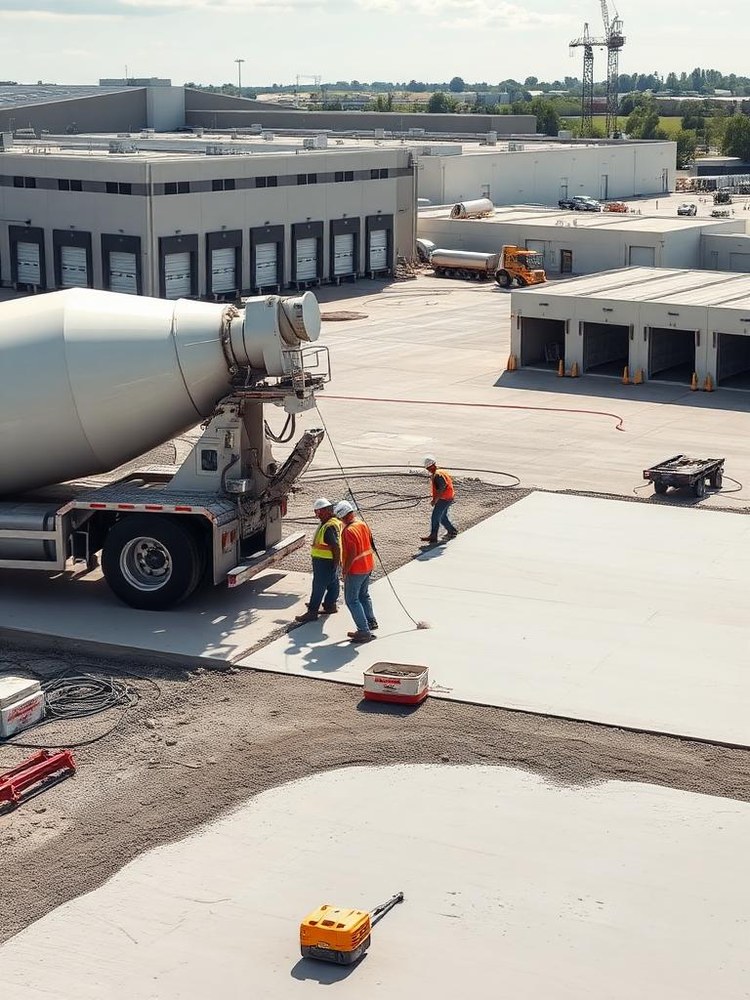
We pour high-strength concrete slabs where asphalt would not survive: manoeuvring yards, loading bays, gas station forecourts, ramps and areas exposed to fuel spills or constant forklift turning.
The slab is designed for the load: compacted and tested base, mesh or rebar as specified, ready-mix concrete at the required strength (typically 25-35 MPa), continuous pour, vibration, screeding and finishing. Contraction joints are saw-cut within the first hours and curing is applied to prevent shrinkage cracking.
Slabs designed for the real load, with joints cut on time and controlled curing: fewer cracks, more years of service.
How we do it
- Compacted and levelled base, tested before any reinforcement is placed.
- Ready-mix with verified slump and strength; cylinder sampling on every pour.
- Joints cut on time, curing applied and traffic released against measured strength.
Safety and control
A pour involves pumps, mixer trucks and crews moving over fresh surface; the area is organised before the first truck arrives.
- Defined access and manoeuvring routes for mixers and the pump
- Boots, gloves and eye protection against concrete splashes
- Area cordoned off during pouring, setting and curing
- Test cylinders used to authorise reopening to traffic
Frequently asked questions
For truck manoeuvring usually 15-20 cm of reinforced concrete over a compacted base; light vehicle areas need less.
Light traffic after a few days, full heavy load once cylinders confirm the specified strength, normally at 28 days.
Concrete where there are point loads, slow turning, heat or fuel; asphalt where speed of execution and lower initial cost matter most.